A portfolio look at a multiplayer party game platform that uses generative AI to create fresh material, but relies on other Players, shared rules, and strong payoffs to stop that material from turning into repetitive slop.
The problem with most AI entertainment
Generative AI is very good at producing novelty. It is much worse at producing lasting interest. A lot of AI-generated content feels impressive for a few minutes and then starts to blur together. There is always more output, but not always more meaning.
Prompt Party Portal sits right at that overlap. It is a multiplayer party game platform that uses generative AI, but the goal is not to dump endless AI output in front of Players and hope novelty carries the experience. The goal is to balance fresh, surprising generated material with the things that actually make group play memorable: many different game modes, playful competition, and strong end-of-session payoff.
That balance is what makes the project interesting. It treats generative AI as raw material for social play, not as the finished product. This is also where the project starts to solve the AI-slop problem. Novelty by itself gets boring. Novelty inside a social structure stays alive longer, because the interesting part is no longer only what the AI made. The interesting part is what the Players do with it.
Why AI works better when other Players are involved
Even when AI is creating the material, the fun still comes from human interpretation: who writes the best prompt, who reads the image most cleverly, who judges well, and how the Leaderboard or final reveal lands with the group.
That is an important distinction. The platform is not trying to prove that generative AI can entertain people by itself. It is trying to prove that generative AI becomes more interesting when it is embedded inside multiplayer rules that create tension, interpretation, and memory.
The project works because it keeps those two forces in balance. AI generates surprise. Multiplayer structure turns that surprise into an actual party game.
AI Players need personality or they become filler
One of the more interesting platform ideas is that Prompt Party Portal does not treat AI Players as blank filler seats. Hosts can add AI guests to a Lobby, and each one gets a distinct personality style: Roasting, Complimenting, or a custom one-line personality prompt.
That choice matters more than it first appears. A generic AI guest quickly becomes repetitive. A guest with a lightly teasing tone, a hype-heavy tone, or a custom personality feels more like table presence than background automation.
This is especially important in a product trying to avoid repetitive AI output. If every bot sounds the same, the illusion collapses fast. The goal is not to convince anyone that the AI is human. The goal is to make sure it contributes a distinct kind of energy.
The three Game Modes
Prompt Party Portal works because it does not bet everything on one interaction pattern. Both generations with text, agents and images are explored. Currently there are three game players can choose.
The Text Game, is where there is a prompt like: "If {person} won the lottery, they would...". All players other than {person} submit an anonymous text submission. {person} is the Judge and evaluates the all answers based on Correctness and Creativity. This mode is important because it proves the platform still values human comedy and table chemistry. Prompts were generated with AI, however each prompt was evaluated by a human in order to make the prompts as distinct from one another. In the future a super-prompt should be able to create new prompts during play in order to create an infinite amount of prompts to play with.
The Image Game, is an adaptation of the Text Game. Instead of landing the best line, Players write an Image Prompt, inspect the generated image result, regenerate when needed, and submit the strongest Image Submission they can create. The competition becomes more visual and more iterative, but still social. The reveal still depends on group taste, anonymous judging, and surprise.
Then there is Feed It Forward, which feels like the clearest expression of what the platform is trying to do with generative AI and multiplayer play.
What Feed It Forward is
The easiest way to describe Feed It Forward is as a generative-AI take on the classic telephone game.
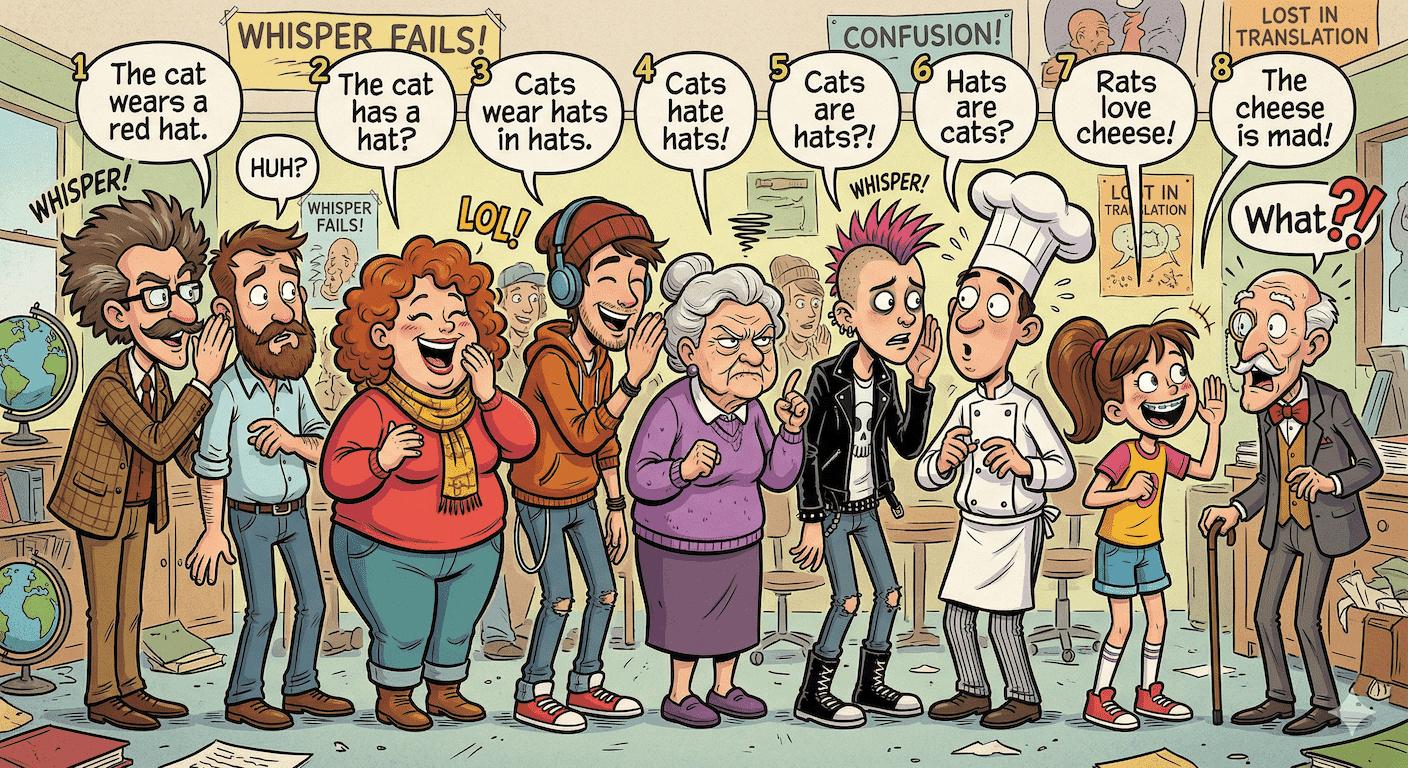
In the original telephone game, one message gets whispered from person to person until it mutates into something silly by the end. Sketch-based image versions, like Drawception or Telestrations, take the same core pleasure and turn it into alternating drawing and guessing. Feed It Forward keeps that same delight in drift and misunderstanding, but rebuilds it around prompts and generated images.
Each Player starts by seeding impossible scenes during setup. Those Seed Prompts create the first images in a set of Chains.
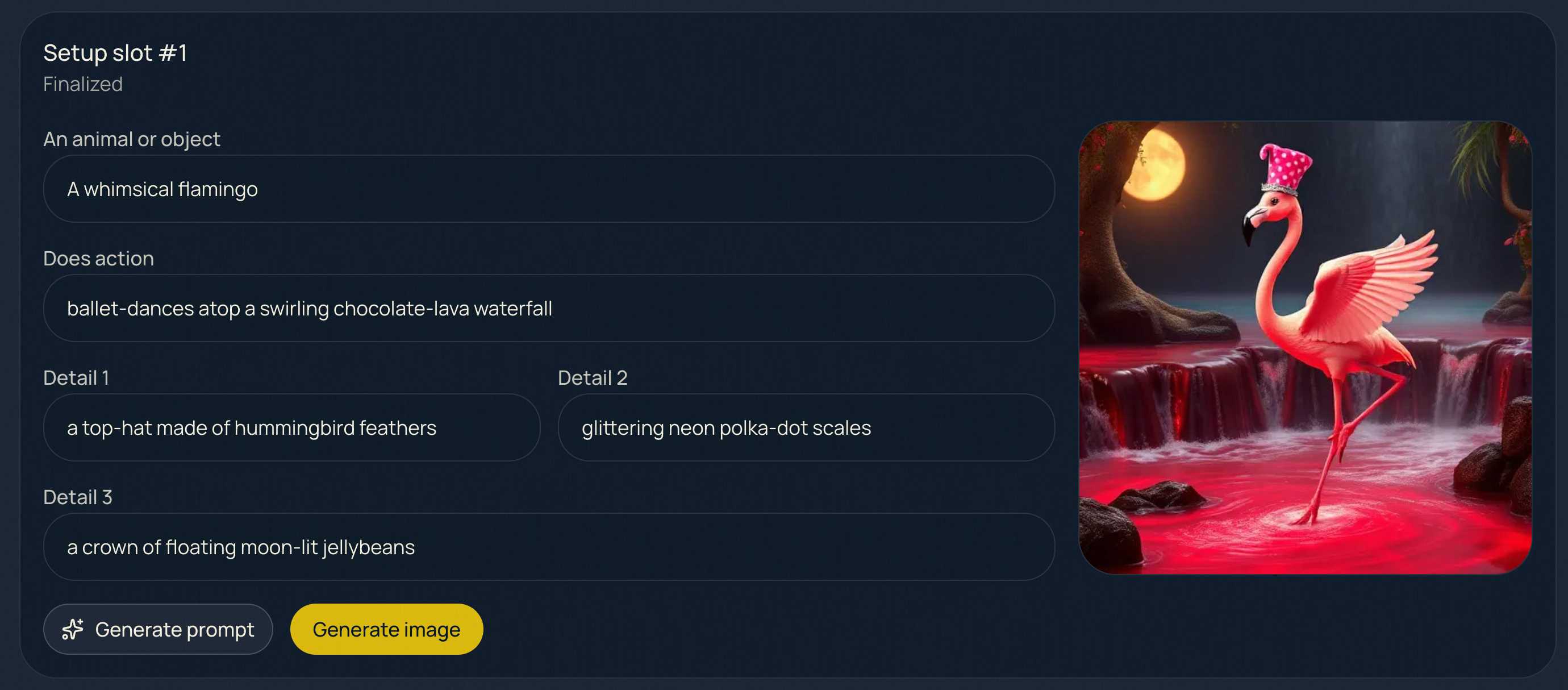
Once the Session begins, a Player no longer sees the original prompt. They only see the current Source Image. Their job is to describe what they think that image represents, submit a new prompt, and send the idea forward. The next person sees the next image in the chain, not the original intent.
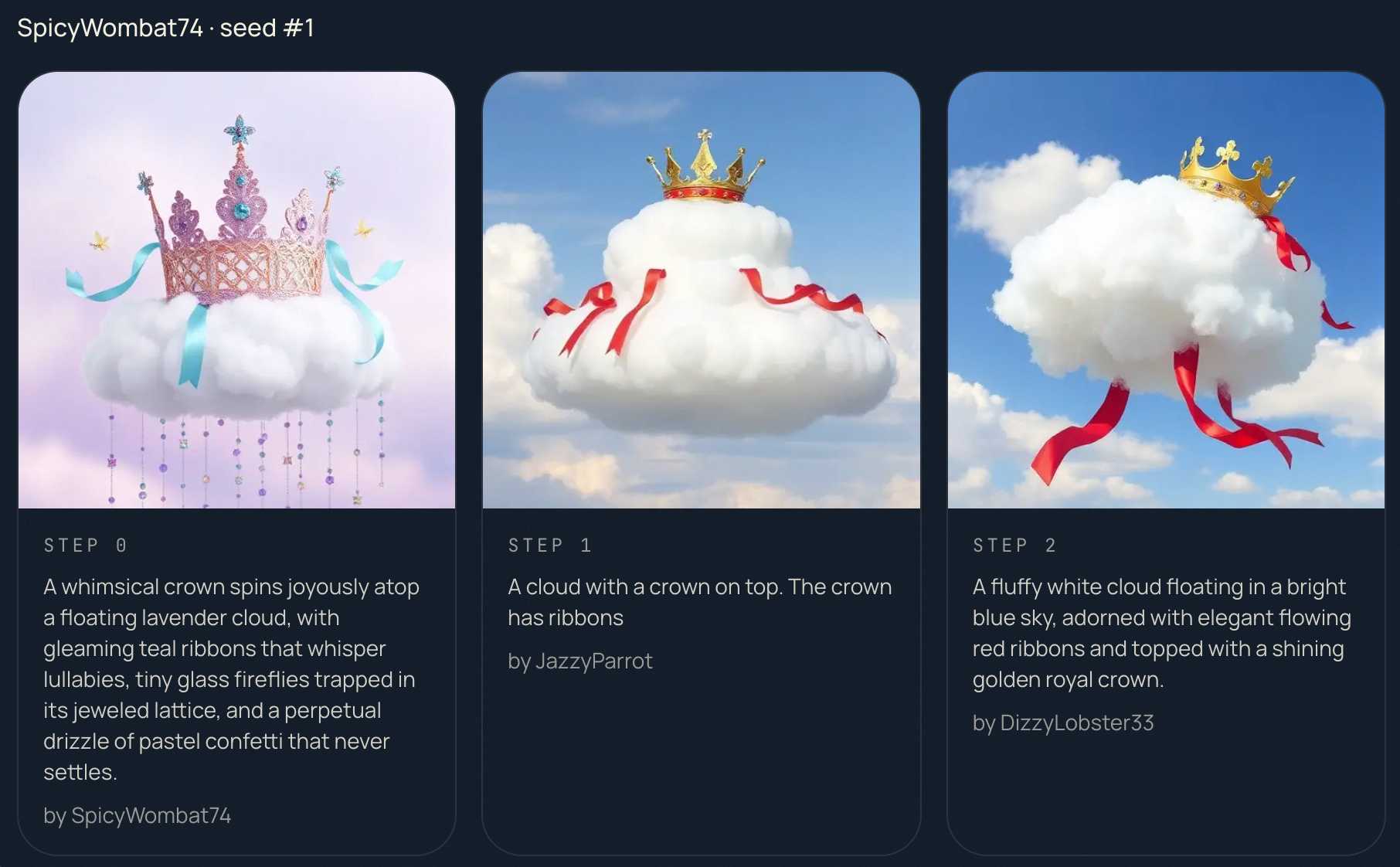
That means every Round is both interpretation and distortion. The Player is not just repeating a phrase. They are reconstructing meaning from an image, then creating the next version of that idea for someone else to read.
What makes the mode really land is the ending. The Chain Gallery reveals how each Seed Prompt drifted across the full Session.
Designing an AI party platform people might actually revisit
The most promising thing about Prompt Party Portal is that it does not mistake AI output for the product itself.
The actual product is the reaction between Players: who submits the sharpest answer, who judges best, how an image mutates across a chain, how an AI guest changes the tone of the table, and what the room sees when the full Chain Gallery finally appears. Generative AI creates the spark, but the multiplayer design turns that spark into tension, laughter, competition, and memory.
In other words, Prompt Party Portal is special because it gives AI-generated content something most AI experiences do not have: a party to live inside.